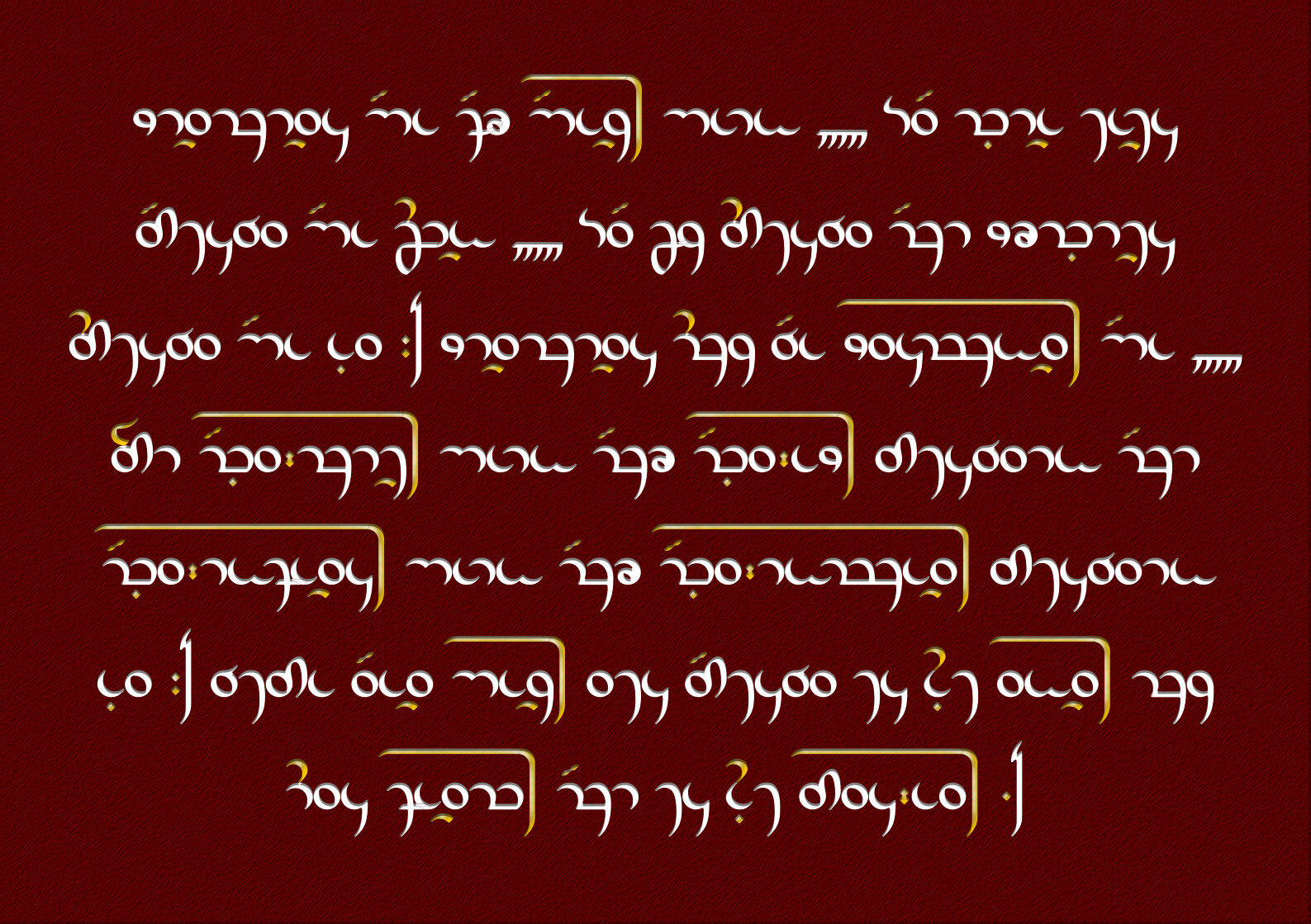
Duaruaq jí, hóı Jíao jıbo, ꝡá luı fıeq Téqna jí zûo, ꝡá zao Têqna rú doılueq Têqna jí ka. Duaruaq râo ní daqmoa jí, tü lạ́rue jıbo róı lạ́caı Teqnabo, rú lạ́bohıaq jıbo róı lạ́bomıa Teqnabo ka. Netı sía Jıao seq Téqna, eq kê Soa Rao bâq Hıam, rú eq kê Tạqca.
This translation is in the Kóıtıeq dialect. Specifically, it uses ꝡá, forethought connectives, pronoun structure, and Neıranı in the artwork. (edit: fix capitalization, recolor a diacritic I missed, higher resolution artwork)
could you provide a little translation for the non-Toaq speakers? I'm sure some would love to be able to engage with this little snippet without having to learn Toaq first ^_^ (cc: @jan_Sonja)
The authoritative English translation of the Short Obligatory Prayer, which I based this translation off of, reads:
I bear witness, O my God, that Thou hast created me to know Thee and to worship Thee. I testify, at this moment, to my powerlessness and to Thy might, to my poverty and to Thy wealth.
There is none other God but Thee, the Help in Peril, the Self-Subsisting.
Here's my back-translation without referencing the original (note that I am not Baha'i):
I hereby testify, O God, that Thou have created me for me to know Thee and to serve Thee. I hereby testify, at this moment, to both my weakness and Thy strength, to my poverty and Thy wealth. There exist no God except Thyself, the One who Helps in Danger, the Self-Causing.
The part,
to my poverty and Thy wealth.
I promise that despite the exact wording, I did not look at the original to translate. I racked my brain to look for a good translation of "bohıaq" and it was the first word I thought of.
The forethought connective I used was tü ... rú, and the forethought connective form of róı would have been tüq ... róı. I used the forethought connective form of rú and not of róı.
I would have been tripped up too because of the one-letter difference :P
I used it as a way of reinforcing how the four terms are coordinated. I should have mentioned that my use of rú vs. róı is based on my interpretation of the Short Obligatory Prayer; when translating it, I interpreted "I testify, at this moment, to my powerlessness and to Thy might, to my poverty and to Thy wealth" as:
"I testify, at this moment,
(to my powerlessness and [simultaneously, by contrast] to Thy might)
and
(to my poverty and [simultaneously, by contrast] to Thy wealth)".
My interpretation and my choice of connectives here is definitely up for debate.
I would have interpreted and translated them the same way; I'm not sure how else I would get the coordination across to be honest other than using rú and róı.